
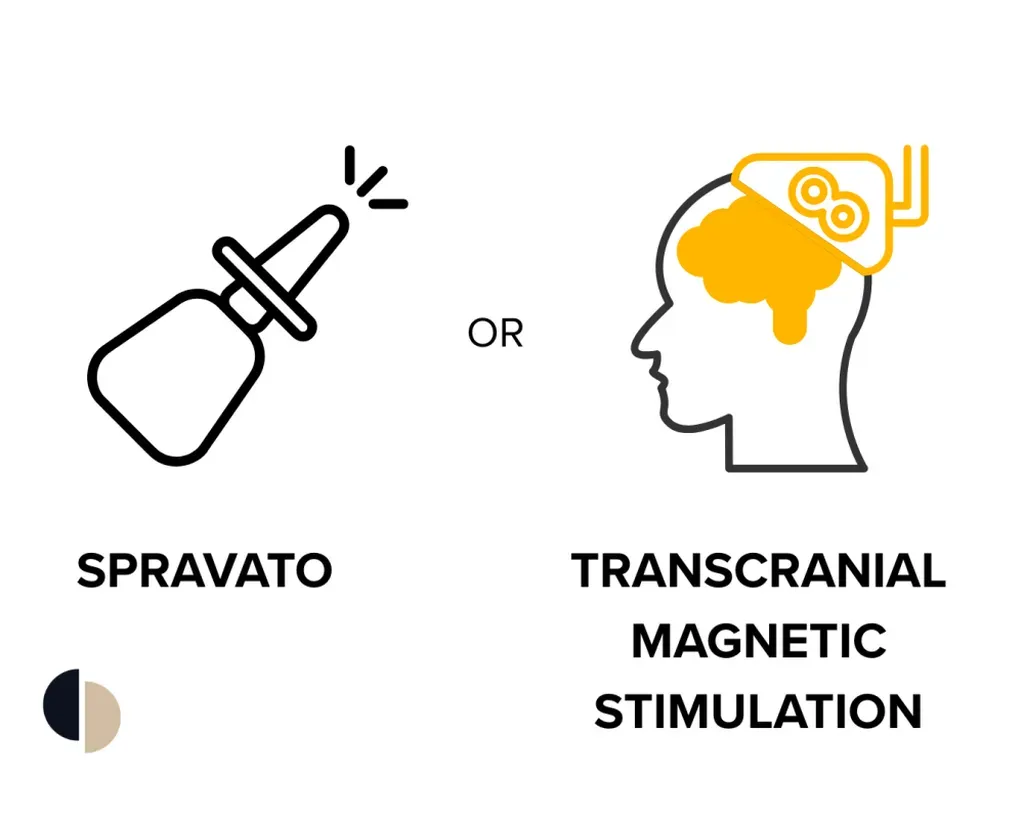
TMS vs. Spravato in Chicago: Which Treatment-Resistant Depression Therapy is Right for You?
You have tried the SSRIs. You have tried the talk therapy. You have adjusted dosages and switched prescriptions, yet the heavy cloud of depression remains. If this sounds familiar, you may be one of the millions struggling with Treatment-Resistant Depression (TRD).
For patients in Chicago and River Forest, the search for relief often leads to two cutting-edge options: Deep TMS (Transcranial Magnetic Stimulation) and Spravato® (Esketamine).
At CNS Brain Center, we understand that having options can sometimes feel overwhelming. Unlike many clinics that only offer one solution, we provide both FDA-approved therapies. This allows Dr. Lenny Cohen and our team to recommend the path that best fits your specific biology, lifestyle, and medical history.
In this guide, we break down the science, the logistics, and the results of TMS and Spravato to help you decide which path to remission is right for you.
The Shared Goal: Neuroplasticity
Before comparing them, it is important to understand what they have in common. Both Deep TMS and Spravato work similarly but differently, both affecting brain neurochemicals ultimately affecting stimulating neuroplasticity and synaptic connections.
Chronic depression causes certain pathways in the brain to become dormant or rigid. Both treatments aim to “wake up” these pathways, encouraging neurons to fire again and form new connections. However, they achieve this goal in very different ways.
Option 1: Deep TMS (Transcranial Magnetic Stimulation)
Best for: Patients seeking a drug-free approach with zero systemic side effects.
How It Works:
Deep TMS uses magnetic fields, similar to an MRI, to stimulate the specific regions of the brain associated with mood regulation (typically the prefrontal cortex). At CNS Brain Center, we use the BrainsWay Deep TMS helmet, which reaches deeper and broader brain structures than traditional TMS coils providing what is known as “deep TMS”
The Experience:
You sit comfortably in a chair while a cushioned helmet is placed on your head. You will hear a tapping sound and feel a tapping sensation on your scalp. There is no anesthesia and no recovery time.
- Session Duration: About 20 minutes.
- Frequency: Daily sessions (5 days a week) for 4-6 weeks.
- Key Benefit: You can drive yourself to and from the appointment. You can come in on your lunch break and return to work immediately.
Why Choose Deep TMS in Chicago?
For our patients who are sensitive to medication side effects (like weight gain, nausea, or brain fog), TMS is often the preferred choice. It is strictly a physical stimulation of the brain’s electrical network, meaning the “drug” is your own brain’s electrical activity.
Option 2: Spravato® (Esketamine) Nasal Spray
Best for: Patients needing rapid relief and those comfortable with a monitored medical experience.
How It Works:
Spravato is a prescription nasal spray derived from Ketamine. Unlike traditional antidepressants that target serotonin, Spravato targets and modulates glutamate, the brain’s main excitatory neurotransmitter. By blocking specific NMDA receptors, Spravato triggers a rapid release of glutamate, causing a burst of new synaptic connections.
The Experience:
Because Spravato can cause temporary dissociation or sedation, it must be administered in our certified medical office, specifically available at our River Forest and Chicago locations.
- Session Duration: You will self-administer the spray under supervision and then relax in a private room for 2 hours while our medical staff monitors your blood pressure and vitals.
- Frequency: Typically twice a week for the first month, tapering down to once a week or every other week.
- Key Consideration: You cannot drive for the rest of the day. You will need a family member or ride-share service to take you home.
Why Choose Spravato in River Forest?
Spravato is fast-acting. While pills can take weeks to build up in your system, many patients report lifting of symptoms within hours or days of the first treatment. It is a powerful option for those who need immediate intervention.
Comparison at a Glance: TMS vs. Spravato
| Feature | Deep TMS | Spravato (Esketamine) |
| Mechanism | Magnetic Pulses (Electrical) | Nasal Spray (Chemical) |
| Invasiveness | Non-invasive | Minimally invasive (Nasal) |
| Systemic Side Effects | None (Local scalp sensation) | Dissociation, Dizziness, Nausea |
| Time Commitment | Daily (20 mins) | Weekly/Bi-weekly (2 hours + no driving) |
| Driving Allowed? | Yes, immediately | No, must have a ride |
| Best For | Routine-oriented patients | Rapid relief seekers |
Which Treatment is Right for You?
Choosing between TMS and Spravato often comes down to logistics and biology.
Choose Deep TMS If:
- You want to avoid adding another medication to your regimen.
- You need to maintain your daily driving independence.
- You can commit to a daily 20-minute appointment for several weeks.
- You are looking for a structural change in brain connectivity.
Choose Spravato If:
- You need rapid relief from severe depressive symptoms.
- You have a support system that can help with transportation.
- You struggle with the daily consistency required for TMS but can commit to longer, less frequent visits.
- You have tried TMS previously without full remission.
The CNS Brain Center Advantage
At many psychiatry clinics, you are sold the only tool they have. At CNS Brain Center, we are a comprehensive neurology practice. We offer Deep TMS, Spravato, Hyperbaric Oxygen Therapy, and Nutrient Infusions all under one roof.
Dr. Lenny Cohen and our team evaluate your full neurological profile—not just your depression checklist—to build a treatment plan that targets the root cause of your condition.
Take the Next Step Toward Remission
You do not have to navigate Treatment-Resistant Depression alone. Whether you visit our Chicago or River Forest center, help is closer than you think.
Contact CNS Brain Center today to schedule a consultation and find out which advanced therapy is your bridge to a brighter future.