
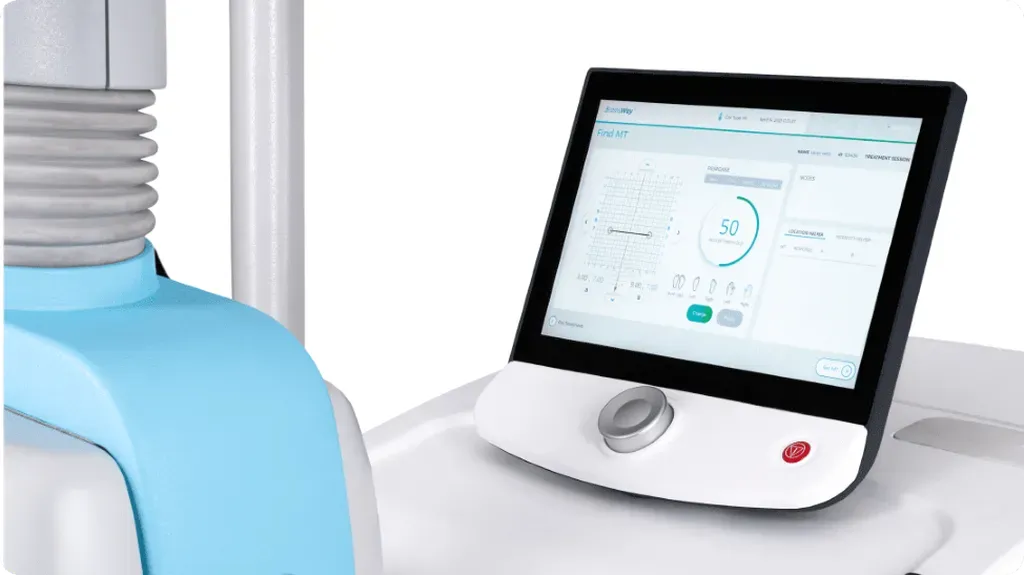
Advanced TMS Therapy in Chicago: Why CNS Brain Center Uses Deep TMS
When you are exploring options for treatment-resistant depression or OCD, finding the right TMS Therapy in Chicago can feel overwhelming. At CNS Brain Center, located in the heart of Chicago, we understand that navigating mental health treatments requires both compassionate care and cutting-edge science. While many clinics offer standard Transcranial Magnetic Stimulation (TMS), we have intentionally chosen to specialize in Deep TMS (dTMS). In this guide, we will explore the differences between standard and Deep TMS, how to compare local providers, and why choosing the right technology is crucial for your healing journey.
Understanding the Landscape of Chicagoland Brain Health
Living in Chicago comes with a fast-paced lifestyle that can sometimes exacerbate mental health struggles. For patients who have not found relief through traditional antidepressants or therapy, TMS has emerged as a beacon of hope. TMS is a non-invasive FDA-cleared treatment that uses magnetic fields to stimulate nerve cells in the brain to improve symptoms of depression.
However, not all TMS treatments are created equal. When comparing Downtown Chicago TMS providers, the most significant differentiator is the type of coil used to deliver the magnetic pulses: standard rTMS (repetitive TMS) versus Deep TMS.
Standard rTMS vs. Deep TMS: What is the Difference?
To make an informed decision about your neurological care, it is essential to understand the technological differences:
- Standard rTMS (Figure-8 Coil): Traditional TMS uses a “Figure-8” shaped coil. While effective for many, its magnetic field typically only penetrates about 1.5 centimeters into the brain’s cortex. It targets a very narrow, focal area, which requires precise mapping. If the coil is slightly misaligned, or if the patient’s brain anatomy varies, the treatment may miss the optimal neural circuits.
- Deep TMS (H-Coil): Deep TMS, the technology we utilize at CNS Brain Center, uses a patented H-Coil. This advanced design allows the magnetic fields to safely penetrate much deeper—up to 3.2 centimeters—stimulating broader neural networks simultaneously. By reaching deeper structures of the brain associated with mood regulation and reward pathways, Deep TMS offers a more comprehensive approach to neuro-modulation.
Key Benefits of Deep TMS Therapy in Chicago
Why do we prioritize this advanced technology at CNS Brain Center? Because clinical outcomes and patient comfort drive everything we do.
- Broader and Deeper Stimulation: By reaching deeper cortical areas, Deep TMS increases the likelihood of stimulating the exact neural pathways responsible for depression, anxiety, and OCD. You can read more about the efficacy of deeper cortical stimulation in studies published by the National Institutes of Health (NIH).
- Enhanced Neuroplasticity: Deep TMS promotes neuroplasticity—the brain’s ability to reorganize itself by forming new neural connections. This encourages long-lasting relief from depressive symptoms.
- Shorter Treatment Sessions: Many Deep TMS protocols can be completed in just 20 minutes per session, making it highly convenient for busy professionals seeking North Shore and Chicago suburbs neurology or downtown treatments on their lunch break.
- High Efficacy Rates: Deep TMS has shown remarkable remission rates for patients with treatment-resistant major depressive disorder (MDD) and is uniquely FDA-cleared for treating Obsessive-Compulsive Disorder (OCD) and smoking cessation.
Comparing TMS Providers: What to Look For
As you evaluate different clinics offering TMS Therapy in Chicago, we recommend asking the following questions:
- What type of coil do you use? Ensure you know whether you are receiving standard figure-8 TMS or Deep TMS.
- Is the treatment plan customized? Brain mapping and motor threshold testing should be tailored specifically to your neuro-anatomy.
- Are the technicians and doctors experienced? Look for a clinic with a dedicated focus on neurology and cognitive health, rather than a general practice that simply added a machine.
- Does the clinic offer a holistic approach? At CNS Brain Center, we believe TMS is most effective when paired with lifestyle adjustments, therapy, and comprehensive psychiatric support.
The Science Behind the Healing
Deep TMS works through the principles of electromagnetic induction. When the H-Coil is placed over the head, it generates brief magnetic fields that pass unhindered through the skull. These fields induce localized electrical currents within the targeted brain tissues.
In a depressed brain, certain areas—like the dorsolateral prefrontal cortex (DLPFC)—are often underactive. The electrical currents from Deep TMS depolarize neurons in these regions, forcing them to fire. Over a series of sessions, this repeated stimulation encourages angiogenesis (the formation of new blood vessels) and the release of neurotransmitters like serotonin, dopamine, and norepinephrine. It essentially “wakes up” dormant areas of the brain, offering profound, biological relief.
Your Path Forward at CNS Brain Center
Dealing with chronic mental health conditions is exhausting, but you do not have to navigate it alone. If you are searching for the most effective, scientifically backed depression or OCD treatments available, Deep TMS provides a proven path toward remission.
Ready to reclaim your life? Take the first step toward lasting mental wellness. Schedule a comprehensive consultation with our Chicago-based experts today at www.cns-center.com.
Frequently Asked Questions
No. Deep TMS is well-tolerated and non-invasive. You may feel a tapping sensation on your scalp and hear a clicking sound during the procedure, but it does not require anesthesia or sedation.
A standard course of treatment typically involves daily sessions (Monday through Friday) for about 4 to 6 weeks, followed by a brief tapering period.
Most major commercial insurance providers and Medicare cover Deep TMS for Treatment-Resistant Depression when certain clinical criteria are met. Our billing specialists at CNS Brain Center can help verify your specific benefits.
Unlike systemic medications (like SSRIs) that circulate throughout the entire body and can cause side effects like weight gain, nausea, or insomnia, Deep TMS is localized. It specifically targets the brain, resulting in very few, if any, systemic side effects.